PLANNER · CONSTRAINT LAYER
Can a Planner Adjust My China Itinerary Around Public Holidays, Weather, and Attraction Closing Days?

In this article
- Treat holidays, weather and closing days as three different constraints
- For public holidays, change the trip before changing the day
- For weather, keep the city and swap the sequence
- For closing days, move the anchor—not every nearby activity
- Build a constraint ledger before asking for a revision
- Use paired fallbacks, not a second full itinerary
- Revise in the right order
- What can a planner know, and what remains your responsibility?
- Can a planner detect every Chinese public holiday automatically?
- Should I cancel an outdoor attraction when rain is forecast?
- What if an attraction closes after I have booked the trip?
- Next step
Yes—a planner can adjust a China itinerary around public holidays, weather and attraction closing days. The useful version does not merely move boxes on a calendar. It identifies which facts are fixed, which risks are forecast-based and which activities can be replaced without damaging the trip.
The important limit is verification. Holiday calendars, venue notices, reservation rules and forecasts can change. A planning tool can reorganize the route around the information you provide, but it cannot guarantee that a venue will open, a train will have inventory or rain will arrive at a particular hour.
Treat holidays, weather and closing days as three different constraints
These problems fail differently. A public holiday changes demand across an entire destination. Weather changes the quality or safety of particular activities. A closing day removes one venue while the rest of the city may operate normally.
Start with the trisAino China itinerary Planner, then add a constraint layer rather than rebuilding from scratch every time a new fact appears.
| Constraint | What it changes | Best adjustment | Verify with |
|---|---|---|---|
| Public holiday | Demand, queues, ticket availability and transport pressure | Move critical bookings earlier, reduce transfers and protect alternatives | Official annual calendar and operators |
| Weather | Comfort, visibility and whether outdoor time is worthwhile | Swap indoor and outdoor blocks while preserving geography | Current official forecast and local warnings |
| Closing day | One venue or attraction cluster | Move the anchor visit to another day and fill the gap locally | Venue’s official notice or booking page |
| Temporary restriction | Entry route, opening zone or reservation method | Follow the current instruction; do not rely on an old itinerary | Venue or relevant authority |
For public holidays, change the trip before changing the day
China’s holiday calendar can include longer breaks and adjusted working weekends. For example, the official 2026 public holiday schedule lists a nine-day Spring Festival break and a seven-day National Day break. The practical effect is not that travel becomes impossible; it is that demand concentrates.
If your dates overlap a major holiday, first decide whether the destination itself is still right. Then protect the hardest inventory, reduce fragile same-day connections and accept that a famous site may require more time. The detailed guide to traveling in China during National Day Golden Week shows why trains, crowds and route shape need to be considered together.
Do not solve a high-demand week by adding more stops. Fewer bases, earlier reservations and shorter transfer chains create more resilience.
For weather, keep the city and swap the sequence
A forecast should usually change the order inside a city before it changes the entire route. Put exposed viewpoints, gardens and long walks into the better weather window. Move museums, covered markets, workshops or slower dining experiences into the weaker window.
Use an official forecast source such as the China Meteorological Administration close to the travel date. Long-range seasonal patterns can guide packing and broad timing, but they should not be treated as an hour-by-hour promise.
For closing days, move the anchor—not every nearby activity
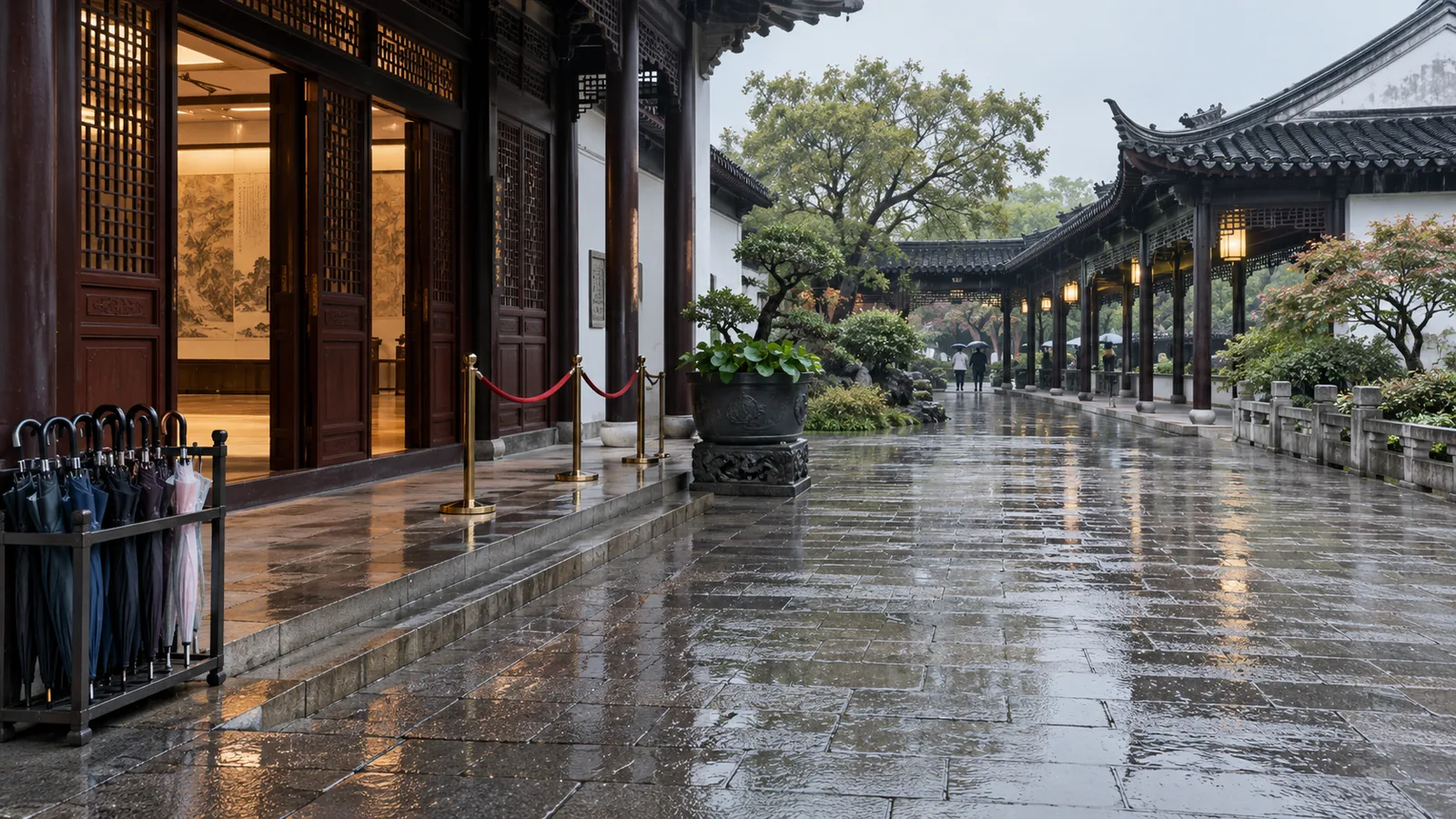
Suppose a museum is the anchor for Tuesday but its official schedule shows it is closed. Move the museum to another compatible day, then keep Tuesday’s neighborhood if it still works. Replace the closed anchor with a market, covered street, park, café, temple exterior or another flexible activity nearby.
This preserves the route’s geography. A common mistake is to replace one closed venue with a famous attraction across the city, creating a new transfer problem.
Build a constraint ledger before asking for a revision
Give the planner a short list of facts rather than a vague instruction to “make it realistic.” Include travel dates, official holiday overlap, fixed bookings, known closure days, weather-sensitive priorities and what you are willing to drop.
- Fixed: flights, trains, hotel nights, event tickets and timed admissions.
- Preferred: landmark priorities and experiences that define the trip.
- Flexible: neighborhood walks, meals and optional stops.
- Conditional: viewpoints, hikes, gardens or outdoor performances.
Use paired fallbacks, not a second full itinerary
For each weather-sensitive block, prepare one nearby indoor alternative. For each closed-attraction risk, identify one substitute in the same area. A fallback should be easy to activate; a second full itinerary doubles the research burden and creates more decisions during the trip.
The same stress-testing method used to decide whether a daily sightseeing plan is realistic also works here: count transfers, fixed times, meal windows and recovery margin after every swap.
Revise in the right order
- Lock dates and bookings that truly cannot move.
- Mark holiday pressure and venue closures.
- Group activities by neighborhood.
- Place weather-sensitive anchors into the best available windows.
- Add one nearby fallback for each vulnerable block.
- Recheck transport and reservation details after the revision.
Changing the route in this order prevents a local issue from creating a chain of unnecessary hotel and transport changes.
What can a planner know, and what remains your responsibility?
A planner can compare alternatives, identify crowded days, protect route direction and explain tradeoffs. It can revise quickly when you supply a closure or forecast. It should not be treated as the source of truth for live inventory, emergency warnings or venue operations.
Reopen the official confirmation shortly before the relevant day. If a ticket, closure or warning matters to the plan, save the current information where you can reach it.
Can a planner detect every Chinese public holiday automatically?
It may recognize major holidays, but you should still check the official calendar for the year of travel. Adjusted working weekends and destination-specific events can also affect operations.
Should I cancel an outdoor attraction when rain is forecast?
Not automatically. Consider intensity, safety warnings, visibility, ticket flexibility and your tolerance. Often the better response is to swap morning and afternoon or move the outdoor block by one day.
What if an attraction closes after I have booked the trip?
Protect the fixed transport and hotel structure first. Move the affected anchor if possible, then use a nearby fallback. Follow the venue’s current instructions for tickets or refunds.
Planning guidance reviewed on 26 October 2026. Holiday calendars, forecasts, warnings, opening days and reservation rules can change; verify them with current official sources and the relevant venue or operator.